Sunday, March 22, 2020

Progress, innovation and risk management - planning and prediction


Chapter 2, Summary:
Ingenuity helps create critical situations from which humans are unable to emerge. Societies often become accustomed to hardship, unmotivated to prevent it. While learning is one of the human species' special skills, it sometimes fails. Innovation has unpredictable results that defy solutions unless humans are boldly creative. Science creates complex factors such as pollution related disease, or climate change. Subjugating nature is part of man's culture,* but while science has given us powers for dominating nature, it has created new forces that we cannot easily overcome.

Excerpts (Chapter 2, Escaping the progress trap)
    What happens when into this soup of innovation are poured ingredients which act as catalysts for results that we don't expect and cannot control? Stratospheric ozone loss is one instance where an unanticipated catalyst, in this case ultraviolet light, allows chlorine atoms to escape from chlorofluorocarbons (CFCs) and break down ozone in the upper atmosphere. This lack of ozone lets excessive amounts of ultraviolet light through to the earth, where it contributes to cancer and plant mutation. Closer home, the catalyst for the creation of toxic ground level ozone from exhaust fumes is something benign: sunlight. Car-makers are trying to control this with catalytic converters. But what about deforestation, which when combined with global warming or climate change produces flash floods that cannot be controlled? People die in large numbers and disease becomes rampant, while homes and livelihoods are washed away. Reforestation could reverse these trends but it often happens too late. 
     As the innovation cocktail becomes ever more complex, who is to say what the next great catalyst will be or how disastrous? We don't know what combination of ideas, compounds and organisms will bring forth some unprecedented future curse, or blessing. There is much evidence to suggest that we, in the industrialized world, are pursuing progress with a blindness that could lead to the creation of a problem that no one will be able to predict or plan for. With a constant stream1 of additional chemicals being introduced, there is no telling when the next catalytic mishap will occur.2 Yet there are also unprecedented opportunities to avoid this fate, with education reaching new peoples and intellectual cross-pollination taking place among cultures whose flowering has yet to happen.
    * Sigmund Freud, Civilization and its Discontents, W. W. Norton, New York, 1989, p. 27.
     1. "Some 1,0002,000 new chemicals enter the commercial market every year, many without adequate prior testing or evaluation of effects" World Commission on Environment and development, Our Common Future, Oxford University Press, Oxford 1987, p. 224. 
     2. "The number of existing substances reported in 1981 was 100,106, the current number of existing substances marketed in volumes above 1 tonne is estimated at 30,000. Some 140 of these substances have been identified as priority substances and are subject to comprehensive risk assessment carried out by Member State authorities. There is a general lack of knowledge about the properties and the uses of existing substances. The risk assessment process is slow and resource-intensive and does not allow the system to work efficiently and effectively. The allocation of responsibilities is inappropriate because authorities are responsible for the assessment instead of enterprises which produce, import or use the substances. Furthermore, current legislation only requires the manufacturers and importers of substances to provide information, but not the downstream users (industrial users and formulators). Thus, information on uses of substances is difficult to obtain and information about the exposure arising from downstream uses is generally scarce. Decisions on further testing of substances can only be taken via a lengthy committee procedure and can only be requested from industry after authorities have proven that a substance may present a serious risk. Without test results, however, it is almost impossible to provide such proof. Final risk assessments have therefore only been completed for a small number of substances."  Commission Of The European Community, Brussels, 27.2.2001  COM(2001) 88 final WHITE PAPER Strategy for a future Chemicals Policy, p. 6.


Monday, February 03, 2020

An early study of Progress Traps

The progress trap phenomenon was studied independently in 1990.
(Concordia University, Montreal - Global Geopolitics)
The Progress Trap – Science, Humanity and Environment - investigates the behavioral aspects of the condition.

Wednesday, April 04, 2018

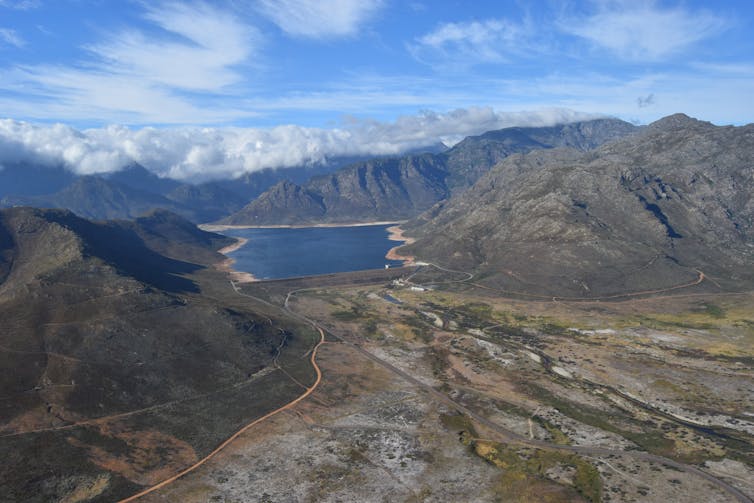
Five key lessons other cities can learn from Cape Town’s water crisis


File 20180329 189824 uwlzk5.jpg?ixlib=rb 1.1
The Berg River Dam on 7 March 2018 about 48% full.
Author supplied

Kevin Winter, University of Cape Town

Postponing Day Zero in Cape Town for 2018 comes as no surprise. There was no sense to it once the day had been pushed into the winter rainfall period. It also didn’t make sense for the Western Cape and Cape Town governments to continue drafting detailed logistical plans for points of water distribution in the event that taps were turned off across the city.

But Cape Town’s water supplies remain at high risk because the long-term predictions for rainfall in the south-western Cape remain uncertain. Dam levels continue to fall while people are struggling to achieve the city’s target of 450 million litres per day. And yields from new water schemes will only be known in the coming months and next year.

The general perception is that the onset of climate change would be slow and measured. This would afford authorities the time to intervene with considered plans. But climate change is a disrupter and takes no prisoners. Over the past three years, Cape Town and the surrounding regions has experienced successive years of well below average rainfall. The experience is changing the way people think about water and how it is managed.

There are five key lessons that have been learnt so far.

1. Adaptation to climate change

The big lesson is being better prepared to deal with a prolonged drought. Cape Town was, and continues to be, under prepared. Over 95% of the city’s water comes from surface water dams. After three years of below average rainfall, the lowest on record, the dams are now running on empty.

Sixty years ago the Australian city of Perth was in a similar position with most of its water supply from dams. The Australian Big Dry drought changed everything. Over 50% of their water supply comes from desalination plants and 40% from groundwater.

A water resilient city should be capable of reducing risk by diversifying water sources to include supplies from groundwater, storm water, reused water, treated effluent and desalination. Resilient, water sensitive cities also integrate the whole urban water cycle into its water resource management system. This means, for example, being smarter about capturing rainfall across the city, in storing storm water underground, and in reusing treated effluent for a variety of purposes not necessarily for drinking purposes.

Cities are the new catchments. There should be no reason to hesitate on implementing these actions. They won’t only climate proof the city, they’ll also make them healthier and more sustainable places to live.

2. Cities lead

National government can’t be expected to lead cities in dealing with water scarcity and drought. This is the experience of many cities dealing with water scarcity. Local governments are in a better position to take decisive action and act at a local scale where they can engage citizens, communities and businesses in averting the water crisis. National governments are slow to intervene, and when they do their actions are often not at the right scale or timely enough.

Cities need more autonomy to act decisively, although proactive, inter-governmental support and cooperation is both helpful and necessary.

3. Measure more, manage better

‘You can’t manage what you don’t measure’ should be the rallying cry for improving the quality of data and analysis needed to support and inform decisions. A city without reliable data will struggle to implement strategic plans and priorities. A good example is Melbourne, one of the first cities in the world to implement digital water metering throughout the city.

Measuring and monitoring is essential to understand water demand and flows. But not all data are useful and more data adds little value in the absence of robust analytical and reporting systems.

4. Mixed messages

Public responses to communication and messaging put out by local authorities is often unpredictable. And social media is rapid and unrelenting in its criticism of messages. Politicians and officials often don’t correct these perceptions which can result in misinformation being shared. The City of Cape Town’s public awareness website has been recognised worldwide– for example by the American Water Works Association – as one of the best. But hard evidence does little to change public opinion.

What citizens really want to know is what actions are being taken to alleviate the crisis and relieve the risk. In the case of Cape Town the city has been reporting on the state of the water by supplying information on dam levels, water demand, models and water quality. What it hasn’t done well enough is contain the level of misinformation shared in the public domain and media.

5. Public trust

Above all, public trust is key to encouraging water saving and helping to establish confidence in managing the crisis. Trust is strengthened by a combination of factors. These include honest, credible messaging when progress towards averting the crisis is demonstrated and understood, and when ordinary citizens, communities and businesses are engaged in making a meaningful contribution. Trust gains momentum when citizen voices are heard and when politicians and officials respond accordingly.

Large cities that have experienced ongoing water crises, such as Sao Paulo, are often criticised for failing to establish public-private agreements and robust partnerships

Planning for uncertainty

How cities anticipate and prepare to adapt to drought conditions depends on factors such as their financial, technical and human capital.

The ConversationBut if cities are going to become more resilient and responsive to climate change then a search for new water supplies will be necessary. It is also essential to establish new forms of governance. Innovative approaches need to be explored because we might not yet know what these should look like. The future is uncertain, but there is a lot that can be done right now and we need to learn some hard lessons.

Author: Kevin Winter, Senior Lecturer in Environmental & Geographical Science, University of Cape Town
This article was originally published on The Conversation. Read the original article.

Friday, January 12, 2018

Corruption is directly involved in the inhibition of true progress

Corruption is directly involved in the inhibition of true progress, in keeping vested interests vested and in keeping the status quo static.

How many societies have not been mired in violence due to bribery and arms trading? How many refugees would be spared the resulting voyage of despair? How many alternative energy innovations have not been stifled by oil barons? How many societies have fallen to decay because special interest groups called the shots?

One society that made a determined effort to prevent corruption from plunging it into a cycle of crippling debt was Lesotho, a small African state. When an international construction consortium provided illicit incentives to public officials responsible for their Highlands Water Project – the largest construction project in Africa – the Lesotho administration decided to act. This was a precedent-setting move, in that the defendants were powerful foreign companies.

A documentary on this campaign, called Pipedream,  is in the works. You can sample this documentary at https://www.youtube.com/watch?v=AWTM-Eog55w

Ref: Prosecuting Bribery in Lesotho (11th International Anti-Corruption Conference, Seoul, Republic of Korea)

Sunday, November 05, 2017

USA Government: Most of the warming of the past half-century is due to human activities

First published at progresstrap.org
According to the U.S. Global Change Research Program*, "it is extremely likely that human activities, especially emissions of greenhouse gases, are the dominant cause of the observed warming since the mid-20th century. For the warming over the last century, there is no convincing alternative explanation supported by the extent of the observational evidence."

Excerpt from 2017 report, Executive Summary:
    The magnitude of climate change beyond the next few decades will depend primarily on the amount of greenhouse gases (especially carbon dioxide) emitted globally. Without major reductions in emissions, the increase in annual average global temperature relative to preindustrial times could reach 9°F (5°C) or more by the end of this century. With significant reductions in emissions, the increase in annual average global temperature could be limited to 3.6°F (2°C) or less. The global atmospheric carbon dioxide (CO2) concentration has now passed 400 parts per million (ppm), a level that last occurred about 3 million years ago, when both global average temperature and sea level were significantly higher than today. Continued growth in CO2 emissions over this century and beyond would lead to an atmospheric concentration not experienced in tens to hundreds of millions of years. There is broad consensus that the further and the faster the Earth system is pushed towards warming, the greater the risk of unanticipated changes and impacts, some of which are potentially large and irreversible.(Source)
Excerpt from 2014 report:
Multiple System Failures During Extreme Events
    Impacts are particularly severe when critical systems simultaneously fail. We have already seen multiple system failures during an extreme weather event in the United States, as when Hurricane Katrina struck New Orleans. Infrastructure and evacuation failures and collapse of critical response services during a storm is one example of multiple system failures. Another example is a loss of electrical power during heat waves or wildfires, which can reduce food and water safety. Air conditioning has helped reduce illness and death due to extreme heat, but if power is lost, everyone is vulnerable. By their nature, such events can exceed our capacity to respond. In succession, these events severely deplete resources needed to respond, from the individual to the national scale, but disproportionately affect the most vulnerable populations. (Source)
(The National Climate Assessment summarizes the impacts of climate change on the United States, now and in the future. A team of more than 300 experts guided by a 60-member Federal Advisory Committee produced the report, which was extensively reviewed by the public and experts, including federal agencies and a panel of the National Academy of Sciences.)

* 2014 National Climate Assessment. U.S. Global Change Research Program
1800 G Street, NW, Suite 9100, Washington, D.C. 20006 USA

References:
https://science2017.globalchange.gov/chapter/executive-summary/
http://nca2014.globalchange.gov/highlights/report-findings/widespread-impacts

Monday, June 05, 2017

Make the world a better place (there is no planet B)

On Earth day 2017, a march was organized by scientists, skeptical of the agenda of the Trump administration and critical of Trump administration policies widely viewed as hostile to science. The organizers state that an "American government that ignores science to pursue ideological agendas endangers the world." More than a million people participated worldwide.
The Photo album (of the Montreal March) is on Facebook
See also: Something to celebrate


Friday, January 20, 2017

Virtual Politics - Faking Democracy (book review)

Anyone who witnessed the 2016 election in the United States can be forgiven for asking, "what just happened?!" There is a consensus that what happened was surreal - the word became Merriam-Webster's word of the year. But more specifically, with the hyperbole, the bluster, grandstanding, reality TV and yellow press influence, internet fakery, leaks, relentless below-the-belt tactics and much, much more, virtual politics may be a better description. The real politics were/are going on elsewhere, one assumes.

Bloggers do well to check whether their topic du jour has already been covered. So it was with 'virtual politics' - and not only did I find that it has been covered, I found that it was studied extensively by Andrew Wilson in 2005. Mr. Wilson is Professor of Ukrainian Studies at the University College London's School of Slavonic and East European Studies. His book is titled Virtual Politics, Faking Democracy in the Post-Soviet World. So while America sleeps, Russia adapts KGB-style maneuvers to sustain artificially the central authoritarianism that was the real, militaristic foundation of Kremlin rule in the Soviet, Bolshevik and even Tsarist empires.

As Wilson puts it, "Welcome to a paradise for the most brazen liars, where the most staid and respectable political technology agency in Moscow calls itself Nikkolo-M after Machiavelli, and uses his face on its business cards...Virtual politics is the way that elites seek to manage, manipulate, and contain democracy." Political technology is what consultants like Nikkolo-M engage in, engineering political 'reality' contests in which no hold is barred, and no trick too dirty. Wilson goes to considerable detail regarding the players and their often brutal methods. Indeed the book is highly specific regarding state interference measures that are now familiar in the west.

A list of some chapters will give an idea:
  • 1. 'Active measures': a Russian Tradition
  • 2.  Politics as Virtuality in the Post-Soviet World
  • 3. The 'Political Technologist': Machiavelli as Corporate Adviser
  • 5. Politics as Theatre, Disguising the State Holding Company
  • 7. Dishing the Opposition
  • 8. Inventing the Opposition  etc.
Whether or not Russia directly influenced the 2016 American election as alleged, is not the point. What is new is that US politics reached a new low of surreal dirty stunts, possibly inspired by post-KGB methods. The parallels between Wilson's post-soviet 'paradise' and the  so-called populist 2016 campaign can not be ignored.

Some Americans are already wising up; Rubio's questioning of Tillerson mentioned 'active measures' without being too specific, but the reference could only have been to the Russian practice. The FBI investigation of Paul Manafort and his work for Viktor Yanukovych may be a healthy sign.1 Yanukovych features prominently in Wilson's book.

What does this have to do with progress, or progress traps? One of this project's critiques of progress is that societies can become overly technocratic, fall into a progress trap and undo progress. Clinton's campaign had a staff of no less than 60 mathematicians and statistical analysts. One can become blind to the obvious when immersed in too much analysis. As they say at the Pentagon, "analysis paralysis". Another progress trap critique is that mental paralysis can then be swamped by crude passion,2 the kind that includes racism, intolerance and bigotry. As the world knows, these vices often don't end until they have played themselves out.

For a sense of where the United States may be heading, Andrew Wilson's book, Virtual Politics: Faking Democracy in the Post-Soviet World is recommended reading.

Reference:
1. https://www.nytimes.com/2017/01/19/us/politics/trump-russia-associates-investigation.html?_r=0
2. Goleman, Daniel, Emotional Intelligence: Why It Can Matter More Than IQ, 2005 Bantam Books

Friday, December 02, 2016

"This is inevitable, it is progress, but it is also socially destructive" - Stephen Hawking

Hawking at NASA, 1980s
On December 1, 2016, Stephen Hawking wrote in The Guardian: "The concerns underlying these votes about the economic consequences of globalisation and accelerating technological change are absolutely understandable. The automation of factories has already decimated jobs in traditional manufacturing, and the rise of artificial intelligence is likely to extend this job destruction deep into the middle classes, with only the most caring, creative or supervisory roles remaining.
    This in turn will accelerate the already widening economic inequality around the world. The internet and the platforms that it makes possible allow very small groups of individuals to make enormous profits while employing very few people. This is inevitable, it is progress, but it is also socially destructive."

Hawking could have been discussing progress traps. He is on record as saying “Most of the threats we face come from the progress we’ve made in science and technology. We are not going to stop making progress, or reverse it, so we must recognize the dangers and control them."

Few other scientists have criticized science and technology in such uncertain terms, and one wonders why. Hawking has stature and knowledge on his side, and few would risk embarrassment by disagreeing with so fearless a contender with ALS, a disease that is usually fatal. But it is puzzling that he does not receive the resounding support of scientists and academics in general, in his questioning of progress.

Regarding the environment, Hawking writes in the Guardian article: "We face awesome environmental challenges: climate change, food production, overpopulation, the decimation of other species, epidemic disease, acidification of the oceans. Together, they are a reminder that we are at the most dangerous moment in the development of humanity. We now have the technology to destroy the planet on which we live, but have not yet developed the ability to escape it."

It has always been the belief of this writer that if we understand progress traps, we can solve them. Whether we call them 'unintended consequences', 'ideological pathology', 'collapse' or 'escalation of commitment', these inversions of progress have recurred throughout history. So much so that the progress /collapse syndrome can be studied rigorously, its causes identified, and remedies designed.

It takes a suspension of belief in the sanctity of science and technology to take them apart, however. Or great courage, as with Stephen Hawking.


References:
Joseph A Tainter, The Collapse of Complex Societies, Cambridge University Press, 1988

Joseph A Tainter, Problem Solving: Complexity, History, Sustainability, Population and Environment: A Journal of Interdisciplinary Studies, Volume 22, Number 1, September 2000

Jared Diamond, Collapse, Viking Penguin, New York, 2005. 

McGilchrist, Iain The Master and His Emissary: The Divided Brain and the Making of the Western World, USA: Yale University Press. 2009

Tuesday, October 18, 2016

New York's Mount Sinai hospital schooled by South Africa's Mamelani Projects

The Mount Sinai Hospital in New York is one of the largest and most advanced hospitals in the world. And yet, it is being tutored in patient care by Mamelani Projects, a community patient support system in Cape Town, South Africa.


The PBS video shown here explains the challenge of having community health workers reach patients where professionals are not available: "Mamelani’s health coaches say that, just as in New York City, those realities are often best confronted outside the walls of medical clinics by bringing health education to areas that need it most. The women who’ve attended these classes are making lasting changes to their own health and in the wider community."

In Cape Town, the "health coach" has been effective in reaching patients who need help in managing their health issues such as diabetes, blood pressure, medication problems and chronic conditions. For New York's Harlem, with the city's highest rate of diet related diseases, the Mameloni model has inspired Mount Sinai Heath Systems to find out if the African methods can be incorporated in to U.S. health practices.

At a time when some students at the University of Cape Town have called for science to be decolonized, with the moniker #ScienceMustFall, it may be useful for them to learn that the dedicated health coaches of the Mameloni Project are doing just that, constructively, in helping New York scientists learn from South Africa's most challenged communities.

The full transcript of the PBS feature can be seen at http://www.pbs.org/newshour/bb/can-ordinary-citizens-help-fill-gaps-u-s-health-care/


Sunday, September 25, 2016

Something to celebrate, even in these dark times.

A scientific paradigm shift in the making: climate change - beyond a reasonable doubt.

On September 20, 2016, three hundred and seventy five members of the National Academy of Sciences, including 30 Nobel laureates, made history. They published  "An Open Letter Regarding Climate Change From Concerned Members of the U.S. National Academy of Sciences".

Their main concern was that in "the Presidential primary campaign, claims were made that the Earth is not warming, or that warming is due to purely natural causes outside of human control." Or, as some climate-change skeptics would have it regarding excess CO2: They call it pollution, we call it Life.

What was historic was their agreement that absolute certainty is not a prerequisite for environmental policy: "Absolute certainty is unattainable. We are certain beyond a reasonable doubt, however, that the problem of human-caused climate change is real."

In science, certainty has long been a requirement. In brief terms, a scientific theory can be considered proven or disproven if the scientific method has been followed. The theory must be clearly stated, it must be supported by careful experiment or observation that provides precise data enabling a conclusion to be made with certainty. The conclusion will show proof that the theory is correct, or not. Moreover, the process must be capable of independent verification through a repeat of the steps, with results that confirm the conclusion.

This line of thinking has inspired modern society since the Scientific revolution in the 16th century, when the power of empirical and evidence-based data replaced the classical approach in which reason and argument would prevail. Objective data became the ideal, and subjectivity was to be avoided.

So powerful was the scientific approach that it became the foundation of policy and social practice generally, where the elements were quantifiable, technical and later industrial. Married to technology and industry, the whole of society became subject to the scientific paradigm and thus in danger of falling into a global progress trap. Even Stephen Hawking conceded in January 2016 that  “Most of the threats we face come from the progress we’ve made in science and technology." **

However in the legal field, the adversarial process remained standard, allowing each side in the argument to present their case. The conclusion would be a matter of judgement, by a jury, a judge, or sometimes a panel of experts. In criminal cases this judgement would be beyond a reasonable doubt.

Eventually it became obvious that the Achilles heel of Science was its insistence on absolute certainty. This can be seen in climate change policies, where skeptics and national leaders have been able to claim, successfully, that anthropogenic climate change had not been conclusively proven, and did not conform to "sound science". Countless products have been released into the global ecosystem unchecked because of the difficulty in proving with certainty that they are harmful. A few that were shown later to be harmful, after incalculable damage, were leaded gasoline, CFCs, PCBs and thalidomide. With the emphasis of 'absolute certainty', science inadvertently provided tools for stagnating true progress, especially in the gravely important areas of global warming and climate instability.

With the acceptance of the principle of "beyond a reasonable doubt" the wise members of the Union of Concerned Scientists and the National Academy of sciences, who wrote and signed the open letter, have provided a historic moment, perhaps even a scientific revolution*. The paradigm shift from obstinate objectivity to reasonable judgement is something to celebrate, even in these dark times.

Thomas S. Kuhn, The Structure of Scientific Revolutions, 2nd ed, The University of Chicago Press, Chicacgo, 1970
** Most threats come from progress in science and technology (article January 2016)
...

Note: previous articles in this collection have argued for the application of the principle of "beyond a reasonable doubt" in the context of climate change:


Monday, September 19, 2016

An uncomfortable truth about bigotry and the media

In a satirical article, the Onion has Facebook CEO Mark Zuckerberg saying contritely: "To those who were forced to read a headline they did not agree with when they visited Facebook yesterday, we are deeply sorry. It’s an inexcusable failing on our part if your viewpoints were not reinforced by what you saw onscreen. I want all Facebook users to know that you’ll never again encounter any ideas on our site that are in any way novel or ideologically challenging to you."

The satire was in response to Facebook's about-face on censoring the Napalm victim article, and Zuckerberg's actual claim that the company is a tech company, not a media or news company. The fact is that Facebook does tailor its newsfeeds and trending topics according to the individual client's disposition. It acts as editor, and shapes opinion.

But was the Onion article, however snide, a reflection of reality? The answer to that was provided, oddly enough, by Bill Clinton on the Daily Show with Trevor Noah. The former president, now 70, was Noah's guest a few days after the Facebook About-Face. In an eloquent reply to Noah's dismay at the ugliness of the campaign, Clinton noted “We’re getting siloed by the TV we watch and the web sites we scan...We’re less racist, less sexist, less homophobic and anti specific religions than we used to be. We have one remaining bigotry: we don’t want to be around anyone who disagrees with us.”

With that insight, Bill Clinton warned against the kind of technical progress that provides information while reinforcing intolerance.This is what the world is witnessing with the resurgence of crude bigotry in today's most connected, informed arenas.

Sunday, June 19, 2016

Each of us is a living miracle

The use of weapons (excerpt from Escaping the Progress Trap, chapter 6)
The reason that these points are raised here is that we accept that humans kill humans, evil though it may be, and this is greatly exacerbated by the use of weapons. Unlike other primates, we no longer confront the victim on an equal footing at close range, and our ingenuity allows us to kill in large numbers. The victims may not be weaker individually or even competing for resources... In the proceedings of the 1968 International Symposium on Aggressive Behavior, B. L. Welch notes in his summation:17
Intraspecific aggressive behavior is common and probably occurs in all species of vertebrates, but actual physical contact between animals of the same species is relatively rare. It is normally prevented by species specific conventions which redirect aggressive energies and permit the resolution of differences without bloodshed. We need to gain a better understanding of ways to build such conventions into the social structure.

His overview of the summary is eloquent: "We are fellow travelers at the beginning of a journey into regions where some of the best-kept secrets of men and animals are hidden…Those who are interested in making human social conditions more stable and wholesome will be particularly interested in the ability of environmental and situational factors to encourage the expression of aggressiveness in creative and beneficial ways."

We cannot flee from modern, industrial life and go `back to nature' but we can bring nature back into our lives. The culture of excluding emotion, spirituality, sensuality and intuition from daily life is destructive. Moreover, the idea that humans are like animals and survive mainly by competing against each other, is correct only with regard to our animal origins. It is incorrect with respect to human societies, which do not normally exterminate or isolate those members who are superficially different. We are aware that each human being is exceptionally endowed with a variety of skills. If one is not a good hunter for example, he is not eliminated, but encouraged to use other valuable skills. We are all aware at some level that billions of years of evolutionary refinement lie behind the talents that we share. Whether God created us or we developed through an evolutionary process, the net result is the same: each of us is a living miracle. We find it abhorrent that a group can be targeted for elimination on account of religion, skin color, disability, language or any other quality. Yet societies will do just that, very systematically.18

In truth, humans can tolerate anomalies and promote individual creativity, being fully aware that people are too highly talented to be cast aside on account of differences. It is essential to restore a sense of humane vitality to our daily lives, ensuring that the fruits of ingenuity are used constructively. If scarcity, weaponry and competitive elimination allow us to drift towards widespread elimination, a new species will surely emerge: one that will not be humane. Given our tendency to kill fellow-humans, and great skill in armaments, it is vital that the differences between technical progress and human culture be resolved.

17. B.L. Welch, ed., Proceedings of International Symposium on Aggressive Behavior, Wiley Interscience Div., New York, 1969, p. 369.
18. Wright. R.  A Short History of Progress, by , Anansi Press, Toronto, 2004, p. 121.

Thursday, April 21, 2016

On Earth Day, let's all pat ourselves on the buck.

Unicorns aren't real, everybody knows that.  However, there are 146 private companies listed at the Wall Street Journal as being valued at more than 1 billion dollars each. At the top of the list is Uber, valued at $51 billion and at the bottom is a cluster of companies each valued at a mere 1 billion. That 1 billion mark is symbolised by the unicorn. Altogether the companies are valued at $537 billion.

It reminds me of something...like 2008 all over again, when everyone knew mortgage backed securities were real and as safe as houses, until they weren't. Uber, the alpha unicorn, is still courting investors, even though it is valued at $51 billion. Obviously it's more about using investments to leverage new investors and less about running a healthy business. Sort of like a Ponzi scheme.

But what's troubling me is the nature of their game. Or perhaps the lack of nature. The business categories of these unicorns are:

  • Hardware, 6 companies, 
  • Consumer internet, 34, 
  • Software, 41, 
  • Aerospace and Defense, 1, 
  • E-Commerce 27, 
  • Healthcare, 11, 
  • Real estate, 1, 
  • Financial Services, 16, 
  • Entertainment and Games, 2, 
  • Energy, 1, 
  • Education and Media, 3. 

There is no Environment category.

Only one of the 146 unicorns could be described as having a 'green' objective. It's Bloom Energy Inc. The WSJ describes them thus:
"Bloom makes large stationary power devices that take natural gas as input and convert it into electricity without burning... In 2010, Mr. Sridhar appeared on '60 Minutes' and said he expected a Bloom box in every home in five to 10 years, but Bloom Energy is nowhere near that goal. The company has also raised far more capital -- at least $1.2 billion -- than the $100 million that Mr. Sridhar originally expected would be required."

Lesotho                            photo by Tom Philpott
The vast majority of the other unicorns are software/internet/e-commerce based. Why do investors like that? Because they need minimal human resources and infrastructure to scale up and go global. Consequently they are able to offer investors a much larger return than the stock market. Institutional investors such as city pension fund managers probably flock to companies like Uber. Maybe that's why city administrations all over the world are in a rush to enable such services. No-one even has to bribe them. Bernie Madoff must be having a good chuckle.

With all the green funds available from investors looking for a big return since COP21, we should be delighted. However 'green' might not mean the same thing to everyone, and some might not even see survival as a 'big return'.

Disclosure: I am the developer of a portable device that combines wind and solar electrical energy and stores it in rechargeable batteries. Project information can be seen at gensolaria.com and yes, funding is being sought.

Sunday, April 10, 2016

Alternative energy innovation, investment and the Valley of Death

With the Paris Conference COP21 behind us, one welcomes the flowering of new funding, financing and investment opportunities aimed at developers of solutions for problems wrought by climate change.

According to Reuters (11 Mar 2016) :
The Green Climate Fund (GCF), set up by the U.N. climate change negotiations, has so far allocated just $168 million to eight projects, in a decision made before December's Paris climate summit.
    Another 22 proposals for private and public-sector projects are now in the fund's pipeline. They will ask for $1.5 billion from the fund, to back activities worth more than $5 billion.
They include efforts to improve energy efficiency, strengthen disaster risk management and boost agricultural resilience in Latin America, Africa and Asia-Pacific, as well as to help small island developing states adapt to climate change.
The new Green initiatives include the Breakthrough Energy Coalition, among whose members are Bill Gates, Ratan Tata, George Soros, Jack Ma, Mark Zuckerberg and many more. Their opening statement makes a telling point:
Experience indicates that even the most promising ideas face daunting commercialization challenges and a nearly impassable Valley of Death between promising concept and viable product, which neither government funding nor conventional private investment can bridge... These investors will certainly be motivated partly by the possibility of making big returns over the long-term, but also by the criticality of an energy transition. Success will provide the economic proof points necessary for the mainstream market-driven clean energy economy required for our planetary future.
However, the likelihood of large investment funds actually reaching small innovators seems low. While those who have money to invest do acknowledge the 'valley of death', they still set the rules, and the participants in Bill Gates' Breakthrough Energy Coalition are not exactly folks who have made careers of risking everything to save the planet. For all their talk of risk, the very statement "Success will provide the economic proof points necessary for the mainstream market-driven clean energy economy required for our planetary future" makes it clear that they expect proof of no risk before making investments in innovation. And that their prime objective is making money, not saving the environment.

I hope I am wrong.

In the interest of full disclosure, I am the developer of a portable device that combines wind and solar electrical energy and stores it in rechargeable batteries. Project information can be seen at gensolaria.com  .


Daniel B. O'Leary   April 2016

Sunday, March 06, 2016

Chimps and religion?

Excerpt from Escaping the Progress Trap:

As we step through evolutionary development we can go much farther back on the timeline than Gilgamesh, to see how homo sapiens may have coped with disorientation brought on by new phenomena. One notices a trend in the growth of rituals that became accepted as religion. In Lost Gods1 John Allegro notes Jane Goodall's description of the chimpanzees' dance of defiant affirmation on the outbreak of a thunderstorm, as an indication of early religious ritual. He quotes it in detail:
..the storm broke. The rain was torrential and the sudden clap of thunder, right overhead, made me jump. As if this were a signal, one of the big males stood upright and as he swayed and swaggered rhythmically from foot to foot I could just hear the rising crescendo of his pant-hoots above the beating of the rain. Then he charged off...two other males charged after him. One broke off a low branch from a tree as he ran and brandished it in the air before hurling it ahead of him...With a display of strength and vigor such as this, primitive man himself might have challenged the elements. 2
    (In the Shadow of Man, p. 52.)
In human history the anger of the gods would customarily be appeased by sacrificial rituals whose dual purpose was to relieve tension and solve the problem at hand, whether it was a stubborn disease or a dry spell. These evolved into the theatre of tragedy and comic relief, the simulated sacrifice in Christian churches, and later into psychiatry, counselling, and therapy. Cinema and television have taken over much of the earlier role of live theatre. The purpose of catharsis is to not only relieve tension (or purge the emotions, in Aristotle's definition) but to enable the nervous system's re-engagement of mind and senses, after which we act with a fresh outlook. We get a new perspective on life. Most of us have experienced the emotional readjustment that follows a harrowing experience. Real life drama and the enacted simulation can both have this effect. Closure is the term often used today, and reaching it requires the assistance of a professional therapist.3
  1. John Allegro, Lost Gods, Joseph, London, 1977
  2. Jane Goodall, In the Shadow of Man, Houghton Mifflin, Boston,1971, p. 52.
  3. Daniel O'Leary, Escaping the progress trap, Geozone, Montreal, 2007, p29 

Saturday, January 23, 2016

Most threats come from progress in science and technology ̶ Stephen Hawking

There are more things in heaven and earth, Horatio, 
Than are dreamt of in your philosophy. 
 - Shakespeare, Hamlet (1.5.167-8), 

The renowned physicist recently discussed his BBC* Reith Lecture1 on black holes.2 It emerged that in response to a question submitted by a schoolboy on whether the world is likely to end on account of humans, or through natural disaster, Hawking pointed to humans, their science and technology as potential culprits. According to The Telegraph's Science News3, Hawking responded  “Most of the threats we face come from the progress we’ve made in science and technology. We are not going to stop making progress, or reverse it, so we must recognize the dangers and control them. I’m an optimist, and I believe we can.”

Hawking specifically mentioned nuclear war, global warming and genetically engineered viruses as examples of human-made threats. Colonizing planets is seen as a means of surviving, a point that Hawking also made in the 2011 documentary Surviving Progress4, saying this was our only chance. But now he explicitly identifies science and technology as responsible. There's your progress trap.

In saying that we won't stop progress, or reverse it, Hawking is perhaps inadvertently revealing why science and technology may be our Achilles heel. History abounds with institutions that refused reform, and criticism. Athens prior to the Peloponnesian War, the pre-Reformation Church and the Soviet empire, to name but a few. Critics were seen as heretics and worse. These days, Science and Technology present themselves in many ways as beyond reproach. Thus Hawking's admission of their inherent dangers is a landmark event, for which he deserves the highest praise.

To consider the learning process – that gave us Stephen Hawking – as something not applicable to the problem of progress traps just makes no sense.

Evolution has enabled us not only to learn how to become a very capable survivor in our world, but to create new instruments and modify our world as well as our behaviour. This process suggests there are "more things in heaven and earth than are dreamed of " in our science, and we should learn this lesson as soon as possible. Mars can wait.5

How do we have the brain power to do that? With 80 to 100 billion neurons in any given person's brain,6 and each neuron capable of making and receiving up to 10,000 connections, well....you do the math.

by Daniel O'Leary FRSA - 23 Jan. 2016

  1. http://www.bbc.co.uk/programmes/articles/1qCD6jwN3c6GSzY0SY7DYjH/professor-stephen-hawking
  2. Telegraph Jan.2016.   http://www.progresstrap.org/assets/Prof-Stephen-Hawking-disaster-on-planet-Earth-is-a-near-certainty.pdf
  3. http://www.telegraph.co.uk/news/science/science-news/12107623/Prof-Stephen-Hawking-disaster-on-planet-Earth-is-a-near-certainty.html
  4. http://www.wired.com/2012/04/surviving-progress
  5. Goodman G, Gershwin ME, Bercovich D.   Mars can wait, facing the challenges of our civilization. Isr Med Assoc J. 2014 Dec;16(12):744-7.  http://www.ncbi.nlm.nih.gov/pubmed/25630201
    Amitai Etzioni Mars can wait, Oceans can't.  CNN  Aug.17, 2012 
    http://www.cnn.com/2012/04/09/opinion/etzioni-space-oceans/
  6. http://neuroscience.uth.tmc.edu/s1/introduction.html
* The Reith Lecture with Prof. Hawking - broadcast in 2 parts on BBC Radio 4 on January 26, 2016, and on Feb. 2, 2016 both at 9 a.m.

Sunday, December 13, 2015

Governments have signalled an end to the fossil fuel era, committing for the first time to a universal agreement to cut greenhouse gas emissions

-  from the Guardian.com (Saturday 12 December 2015):
"Six years after the chaotic ending of the Copenhagen climate summit, the agreement now known as the Paris Agreement for the first time commits rich countries, rising economies and some of the poorest countries to work together to curb emissions.

Rich countries agreed to raise $100bn (£66bn) a year by 2020 to help poor countries transform their economies. The overall agreement is legally binding, but some elements – including the pledges to curb emissions by individual countries and the climate finance elements – are not."

read the full article:
http://www.theguardian.com/environment/2015/dec/12/paris-climate-deal-200-nations-sign-finish-fossil-fuel-era

Saturday, January 10, 2015

Economy of scale - small scale.

Escaping the progress trap
Since the beginnings of industry, economy of scale1  meant large scale. It was natural to get as much as possible done with the fewest resources. Over time, this meant larger farms, larger houses, larger cities, larger states, transport systems, and much, much more. Then came machines, electricity and factories - which gave us economies that never slept. One disadvantage of all the bounty was that humans adapted to the machines, most of which were larger than us anyway. There was no choice.

Then, a funny thing happened on the way to indentured omnipotence. Ingenuity began making the the machines smaller and smaller. And smaller. Many machines are still larger than humans, don't sleep and must be fueled non-stop. But our most beloved, frequently used machines are smaller than we are. We can turn them off. We can ignore them. We can stop feeding them. Best of all, a single one of them can do many things. Little miracles. Instead of being slaves to them, we can tell them what to do.

That includes providing music, getting mail, monitoring our heart rate and figuring out exactly where we are the morning after. We adapt these small machines to suit our purposes. They are addictive sometimes, but that's not the same as involuntary slavery to polluting mega-industries like energy production, agribusiness and big pharma. The most useful gadgets such as pacemakers may have only one purpose, but they are small.

Without revolutions, marches or barricades we are quietly liberating ourselves from enslavement to the production line.

The thing is, we can do more things on a small scale, such as individually tailored medical treatments, without sacrificing what we used only to enjoy on a large scale. Yes, Mr. E. F. Schumacher 2, small is beautiful.

Eventually we may be able to dispense with behemoth states, cities and perhaps a few polluting industries. For now, I can set aside the tablet on which I wrote this, for as long as I like.
by Daniel B. O'Leary FRSA
  1. Economies of scale
  2. Small is Beautiful by E.F. Schumacher

Sunday, November 09, 2014

Wind of Change

 The Wind Empowerment 2014 conference (3-7 Nov.) has just ended in Athens. Their video below shows how this technically challenging resource can be harnessed on a community scale, by people who need it most and have the will to make it work.


WindEmpowerment is an association for the development of locally built small wind turbines for sustainable rural electrification.

The keynote speaker was Hugh Piggott, who has built wind turbines on Scoraig island in Scotland, a process that started in the 1970s. He is the author of A Wind Turbine Recipe Book which may be the standard work on the topic. Events included demos, technical sessions and a presentation by Michel Bauwens, (P2P Foundation) on commons-oriented infrastructures.

Participants also visited 'small' wind installations in Marathonas, the site of the battle of Marathon in 490 BC synonymous with success in the face of overwhelming opposition.

by Daniel B. O'Leary, Montreal